What Is AI Voice Cloning?

Revolutionary technology that creates digital replicas of human voices.

AI voice cloning is a cutting-edge technology that uses artificial intelligence to create digital replicas of human voices. These sophisticated systems can analyze samples of a person's speech and generate new audio content that sounds remarkably like the original speaker, complete with their unique vocal characteristics, accent, and speaking style.

Unlike traditional text-to-speech systems, which often sound robotic and unnatural, modern AI voice cloning produces highly realistic results that can be nearly indistinguishable from authentic recordings. This technology has transformed various creative fields, including music production, where it enables artists to experiment with vocal styles, create backing vocals, or even restore damaged recordings.

The latest generation of AI voice cloning tools can generate singing voices as well as speaking voices, opening up new possibilities for musical expression and production. Some systems can even transfer emotional qualities and performance nuances, allowing for expressive and dynamic vocal performances.
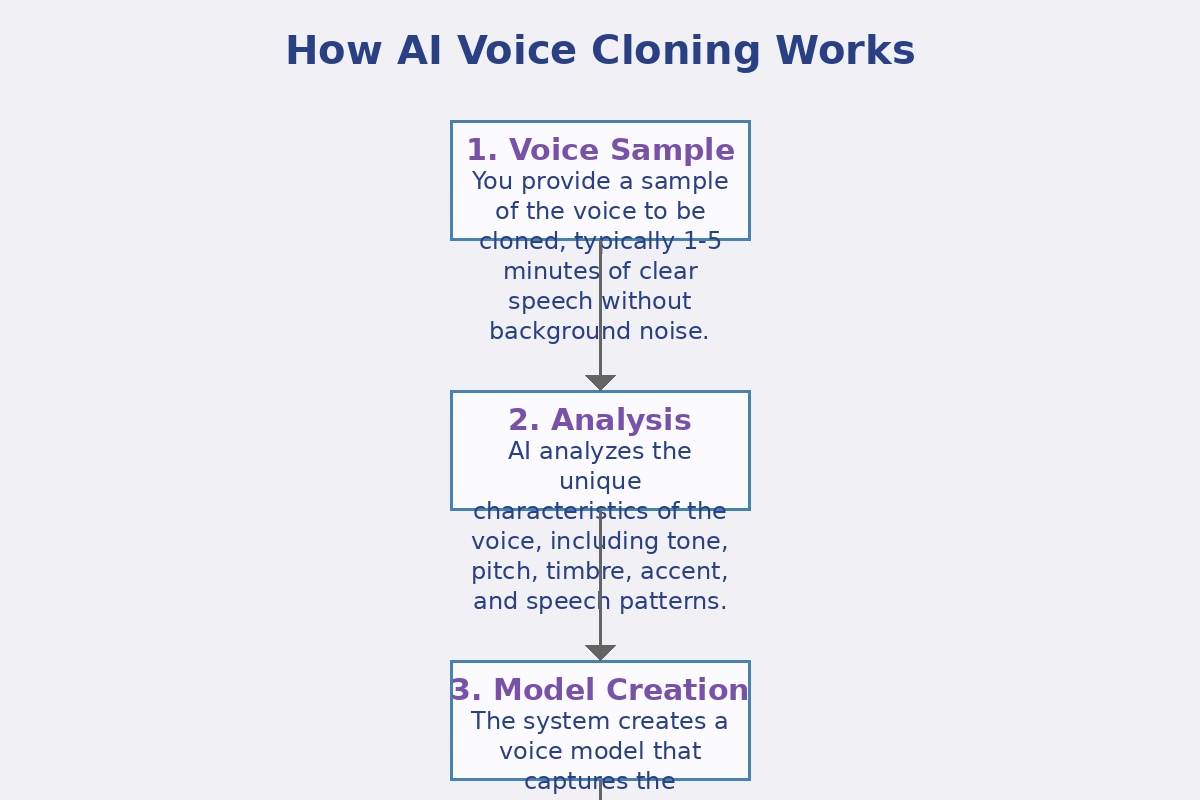
How AI Voice Cloning Works

How AI Voice Cloning Works

Understanding the technology behind vocal replication.

AI voice cloning involves a sophisticated process that analyzes voice samples and creates a digital model capable of generating new speech or singing in that voice. Most modern systems use deep learning techniques, particularly neural networks, to capture the unique characteristics of a voice.

AI Voice Cloning Process

1. Voice Sample Collection

The process begins with collecting high-quality voice samples from the target speaker. Depending on the system, this might require anywhere from a few minutes to several hours of recorded speech or singing. The samples should ideally cover a range of tones, emotions, and vocal expressions.

2. Audio Analysis

The AI analyzes the voice samples, breaking them down into their acoustic components. It identifies key characteristics such as pitch, timbre, resonance, articulation patterns, and speech rhythms that make the voice unique.

3. Voice Model Creation

Using deep learning algorithms, the system creates a digital model of the voice. This model captures both the physical aspects of the voice (how it sounds) and linguistic patterns (how words are pronounced and sentences are structured).

4. Voice Synthesis

Once the voice model is created, it can be used to generate new speech or singing. The user inputs text or musical notation, and the AI produces audio that sounds like the original speaker singing or saying those words, even if they never actually did.

Comparing Top AI Voice Cloning Tools

Find the right tool for your vocal replication needs.

With several AI voice cloning tools available, it's important to understand their strengths, limitations, and use cases. We've compared the leading tools to help you choose the one that best fits your creative goals and technical requirements.

Tool Best For Free Tier Voice Quality Singing Capability Training Time Customization
Compeller.ai Music production Yes (Forever) ★★★★★ Excellent Minutes ★★★★★
Descript Podcast editing Limited ★★★★☆ Limited Minutes ★★★☆☆
Resemble.ai Commercial applications No ★★★★★ Good Hours ★★★★☆
Synthesizer V Virtual singers Limited ★★★★☆ Excellent Hours ★★★★★
Replica Studios Game development Limited ★★★★☆ Limited Minutes ★★★☆☆
Uberduck Creative experiments Yes ★★★☆☆ Good Minutes ★★★☆☆

Top AI Voice Cloning Tools

Detailed reviews of the best AI vocal replication tools available today.

Compeller.ai

Compeller.ai

Our top recommendation for music-focused voice cloning. Compeller.ai offers exceptional voice quality with advanced singing capabilities, making it ideal for musicians and producers looking to experiment with vocal styles.

  • High-quality voice replication
  • Advanced singing voice synthesis
  • Emotional expression control
  • Forever free account available
  • Intuitive user interface
Try Compeller.ai
Descript

Descript

A powerful audio and video editing platform with integrated voice cloning capabilities. Descript's Overdub feature allows you to create a synthetic version of your voice for correcting mistakes or adding new content to recordings.

  • Text-based audio editing
  • Self-service voice cloning
  • Integrated editing environment
  • Limited free tier
  • Ethical use restrictions
Try Descript
Synthesizer V

Synthesizer V

A specialized singing voice synthesis system that offers remarkable control over vocal performances. It's designed specifically for creating realistic singing voices with detailed control over pitch, timing, and expression.

  • Professional-grade singing synthesis
  • Extensive vocal performance control
  • Multiple voice banks available
  • AI and non-AI voices
  • DAW integration
Try Synthesizer V
Resemble.ai

Resemble.ai

A enterprise-focused voice cloning platform that offers high-quality voice synthesis for commercial applications. It provides API access and integration options for developers and businesses.

  • Enterprise-grade voice quality
  • API access for developers
  • Emotional speech synthesis
  • Commercial licensing available
  • Custom voice development
Try Resemble.ai

Popular Use Cases for AI Voice Cloning in Music

Discover how vocal replication technology is transforming music production.

1

Backing Vocals & Harmonies

Create realistic backing vocals and harmonies using your own voice as the source. This allows solo artists to produce full vocal arrangements without hiring additional singers or recording multiple takes.

2

Vocal Experimentation

Experiment with different vocal styles, techniques, and approaches without the physical limitations of your own voice. Try out new vocal ideas before committing to learning or recording them.

3

Demo Production

Create professional-sounding vocal demos for songwriting and composition, even if you don't have access to a vocalist. This helps composers and producers present more complete demos to clients or collaborators.

4

Vocal Restoration

Restore damaged or incomplete vocal recordings by generating missing sections that match the original voice. This can be valuable for archival work or completing unfinished projects.

5

Language Adaptation

Adapt vocal performances to different languages while maintaining the original singer's voice and style. This allows artists to reach international audiences without having to master multiple languages.

6

Posthumous Productions

With proper permissions and ethical considerations, create new performances using the voices of deceased artists. This can help preserve musical legacies and complete unfinished works.

Ethical Considerations in Voice Cloning

Understanding the responsible use of vocal replication technology.

The Importance of Ethical Voice Cloning

As voice cloning technology becomes more accessible and realistic, it's crucial to consider the ethical implications of creating and using synthetic voices. The potential for misuse exists alongside the creative possibilities, making responsible usage guidelines essential.

Key Ethical Principles

  • Consent: Always obtain explicit permission from the voice owner before cloning their voice. This is not just a legal requirement in many jurisdictions but an ethical imperative.
  • Transparency: Be open about the use of synthetic voices in your work. Audiences have a right to know when they're hearing an AI-generated voice rather than a human performance.
  • Attribution: Properly credit both the original voice talent and the AI technology used in your productions.
  • Avoiding Deception: Don't use voice cloning to impersonate others for deceptive purposes, such as scams, spreading misinformation, or creating deepfakes.
  • Respecting Artistic Integrity: Consider how the use of an artist's cloned voice might impact their artistic legacy and reputation.

Industry Best Practices

Many reputable voice cloning services have implemented safeguards to prevent misuse:

  • Requiring identity verification before allowing users to clone voices
  • Implementing voice consent verification processes
  • Adding digital watermarks to synthetic audio
  • Restricting certain use cases in their terms of service
  • Monitoring for potential abuse of the technology

Legal Considerations

The legal landscape around voice cloning is still evolving, but several existing legal frameworks may apply:

  • Copyright law may protect vocal performances
  • Right of publicity laws in some jurisdictions protect individuals' voices as part of their identity
  • Contract law applies when licensing voices for cloning
  • Fraud laws may apply to deceptive uses of voice cloning

At Music AI Tools, we advocate for the responsible and ethical use of voice cloning technology. We encourage all users to consider these principles when exploring the creative possibilities of AI voice synthesis.

Tips for Getting the Best Results from AI Voice Cloning

Maximize the quality of your synthetic vocals with these expert tips.

1

Use High-Quality Voice Samples

Start with clean, high-quality recordings of the voice you want to clone. Minimize background noise, room reverb, and other artifacts. Use a good microphone and record in a treated space if possible.

2

Provide Diverse Voice Samples

Include a variety of speech or singing samples that showcase different emotional tones, pitches, and dynamics. This gives the AI more data to work with, resulting in a more versatile and expressive synthetic voice.

3

Edit Text for Natural Flow

When generating synthetic speech or singing, pay attention to the text input. Add appropriate punctuation, breathing marks, or performance directions to guide the AI toward a more natural-sounding result.

4

Fine-tune Emotional Parameters

Many advanced voice cloning tools allow you to adjust emotional parameters like intensity, breathiness, or vibrato. Experiment with these settings to achieve the desired expressive quality for your synthetic vocals.

5

Apply Subtle Post-Processing

Use gentle audio processing to enhance the realism of synthetic voices. Subtle EQ, compression, and reverb can help integrate the AI voice into your mix and mask minor artifacts.

6

Combine with Human Performances

For the most natural results, consider blending AI-generated vocals with human performances. Use the synthetic voice for backing parts or to augment the lead vocal rather than replacing it entirely.

Start Voice Cloning with Compeller.ai

Create realistic vocal replicas with the most advanced AI voice synthesis technology. Get started with a forever free account and transform your music production today.

Try Compeller.ai Free
Try Free